
For most fleets, the car wash is the cheap part. Getting a vehicle there is not.
When only one wash location is approved, every clean vehicle has to drive there and back. That trip burns fuel, driver time, and uptime — and it repeats every wash, every week, across the whole fleet.
These situations rarely show up as a line item, leaving them unmanaged. Here's where the money actually goes.
The Real Cost Is the Drive, Not the Wash
Fleet managers typically know the price of a wash, but they don't typically know the cost to get the vehicle there.
For a single approved location, the drive is usually the bigger number. One wash location quietly adds:
- Driver travel time
- Fuel and vehicle wear
- Vehicle downtime
- Labor hours on the clock
- Miles that produce no work
The wash is the visible cost, while the detour stays hidden.
A Short Detour Adds Up Fast
Eight extra miles, once a week, across 100 vehicles.
A conservative illustration using 2026 figures:
- About 416 extra miles per vehicle each year
- Roughly $300 per vehicle in operating cost, at the 2026 IRS rate of 72.5 cents per mile
- About 17 hours of driver time per vehicle — near $425 in labor
- Around $725 per vehicle per year, before a single wash is paid for
- Roughly $72,000 a year across a 100-vehicle fleet
Illustrative, not a quote — your number depends on distance, wash frequency, and local rates. The point holds: the trip usually costs more than the wash.
Fuel Is Only the Start
Cutting the detour down to a fuel line misses most of the cost. Every unnecessary mile also means:
- More wear on tires, brakes, and drivetrain
- The next maintenance visit, sooner
- A vehicle sitting in line instead of working
- Less time on the job the fleet exists to do
Industry benchmarks put vehicle downtime at 18 to 24 days a year. Detour driving only adds to it.
Why One Location Creates Detours
The detour is a design problem, not a driver problem.
Fleets grow, open new yards, and cover wider areas. But the wash program often stays anchored to one vendor or one central bay chosen years ago.
A central bay seems like the cheaper option because the water and labor are in-house. It still forces every vehicle across town, and it creates its own problems: shift-change queues, downtime when equipment breaks, and a hard cap on how many vehicles get cleaned in a day.
Wash Closer to Where Vehicles Work
The fix is simple: bring approved wash access to the vehicle instead of sending the vehicle to the wash.
- Brick-and-mortar — best for vehicles already on the road. Stop at an approved location along the route and get back to work in minutes.
- Mobile washing — best for vehicles parked at one yard overnight. Crews clean them on-site, so no one leaves the facility.
Rynse connects fleets to thousands of approved wash locations nationwide, with mobile washing for vehicles best cleaned on-site — so the miles spent chasing a wash largely disappear.
Keep Control While You Expand
More places to wash should not mean less oversight. Rynse brings every wash into one platform:
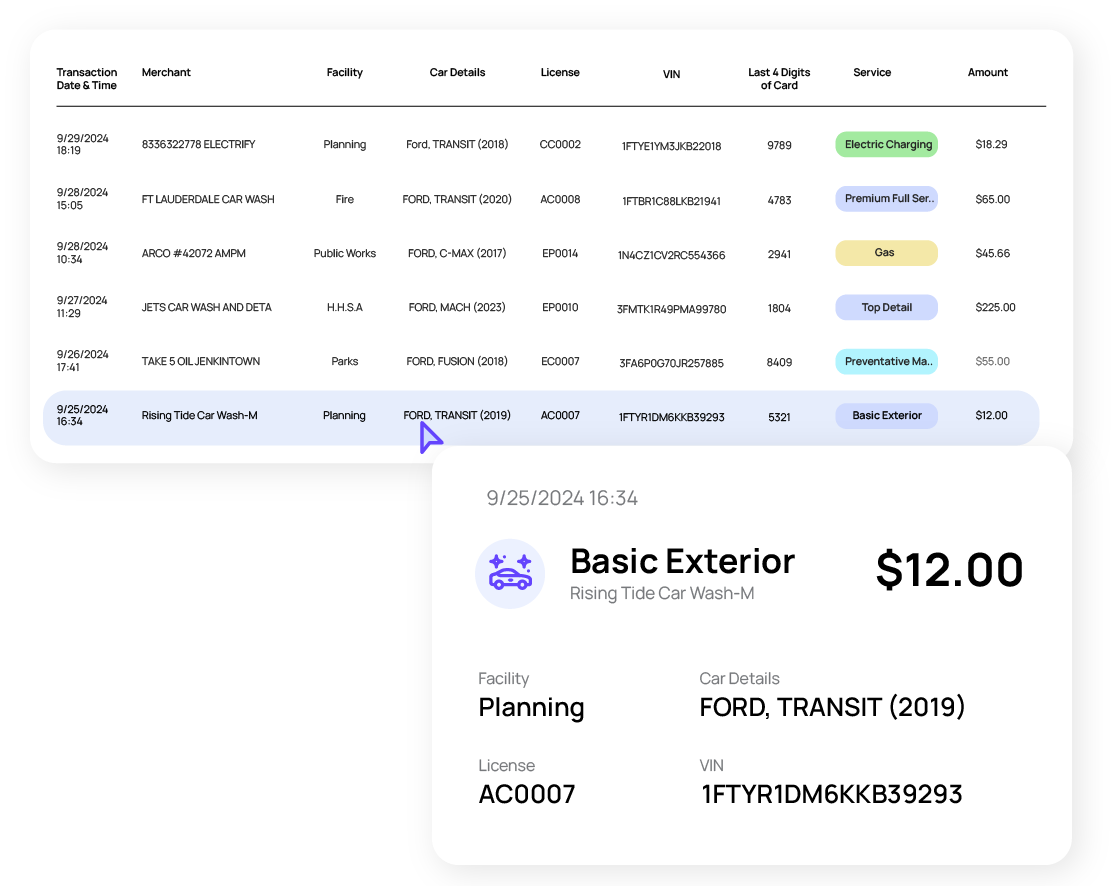
- Real-time reporting on every wash — when, where, which vehicle, and how much
- Centralized billing that replaces stacks of vendor invoices
- Customizable spend controls by vehicle, vendor, or service type
- Built-in fraud monitoring that flags unusual activity early
Frequently Asked Questions
Why does driving across town for a wash cost so much?
The wash is the smallest part of the trip. The detour adds fuel, wear, and driver time, and it keeps the vehicle out of service. Across a fleet and a year, those unbilled miles outweigh the washes.
Isn't one approved wash simpler to manage?
It looks simpler — one vendor, one invoice — but detour driving and downtime erase the savings. A broad network with centralized billing keeps the admin simple and removes the extra miles.
What about our in-house wash bay?
A bay still forces every vehicle to one spot and adds queues and capacity limits. Many fleets keep the bay for some vehicles and add network and mobile access for the rest.
Brick-and-mortar or mobile washing?
Both. Brick-and-mortar fits vehicles already on the road; mobile fits vehicles parked together overnight. Match each to how the vehicle runs.
Where the Real Cost Hides
The cost of a wash is easy to see. The cost of getting there is not — which is why fleets keep paying it.
Bring wash access closer to where vehicles already work, and most of that hidden cost disappears.

Rynse Team