
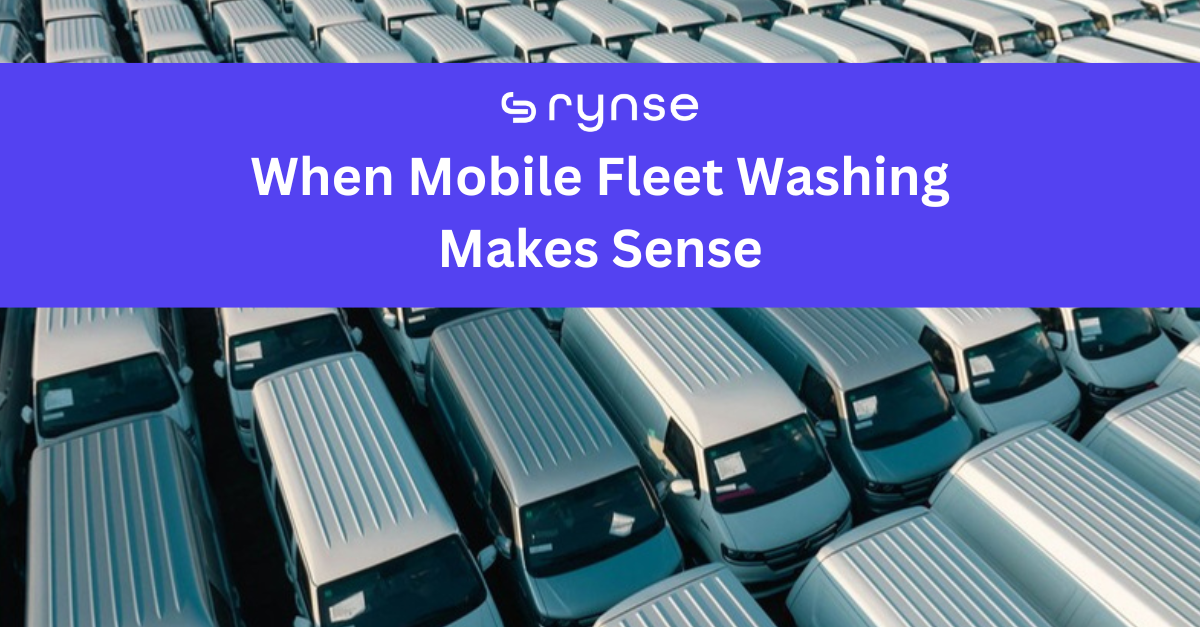
Mobile washing sends a crew to wherever vehicles are parked, so they get cleaned without leaving the lot. It's a great fit for some fleets and overkill for others. Here's how to tell the difference.
What Mobile Fleet Washing Actually Is
The idea is simple: instead of driving to a wash, the wash comes to the vehicle.
- A wash crew visits the yard, depot, or job site on a set schedule.
- Vehicles get cleaned where they're parked, between shifts or overnight.
- No driver is pulled off task to run a wash trip across town.
- It handles vehicles that are hard to move or too big for a standard wash bay.
When Mobile Washing Makes the Most Sense
Mobile washing is best in a few situations. If these match the fleet, it belongs in the program.
- Your vehicles stay parked in one place. Buses, trucks, and equipment staged at a central yard are easy to batch-wash on-site.
- The vehicles are big or specialized. Box trucks, transit buses, and heavy equipment often won't fit a standard tunnel or in-bay wash.
- Pulling a vehicle off route is expensive. When downtime costs more than the wash itself, bringing the wash to the vehicle wins.
- Many vehicles get washed at once. A crew can work through a full lot in a single visit.
- Vehicles sit idle overnight. Crews can wash between shifts so vehicles start the day clean.
Where a Brick-and-Mortar Wash Location Still Wins
Mobile washing isn't always the answer. For plenty of vehicles, a nearby brick-and-mortar wash location is faster and cheaper.
- Vehicles are spread out and always on the move, closer to a wash than to the yard.
- A wash is needed today, not on the next scheduled visit.
- The fleet is mostly standard cars, vans, and pickups that fit any standard car wash.
- Drivers already pass wash locations on the routes they run.
Why Most Fleets Use Both
For fleets that have outgrown a single wash location, the choice is rarely all-or-nothing. The strongest programs blend the two so every vehicle has a clean, convenient option. It's how fleets scale from one location to 75+ without piling on admin work.
- Mobile washing handles the vehicles that stay put; brick-and-mortar wash locations handle the ones on the move.
- Big, difficult-to-move vehicles get washed on-site; everyday vehicles wash along their route.
- Scheduled deep cleans happen at the yard; quick washes happen wherever the vehicle is.
- One program covers every vehicle type, instead of forcing them all through a single method.
Rynse connects fleets to both mobile wash providers and thousands of brick-and-mortar wash locations nationwide, all in one program.
Keep Every Wash in One View
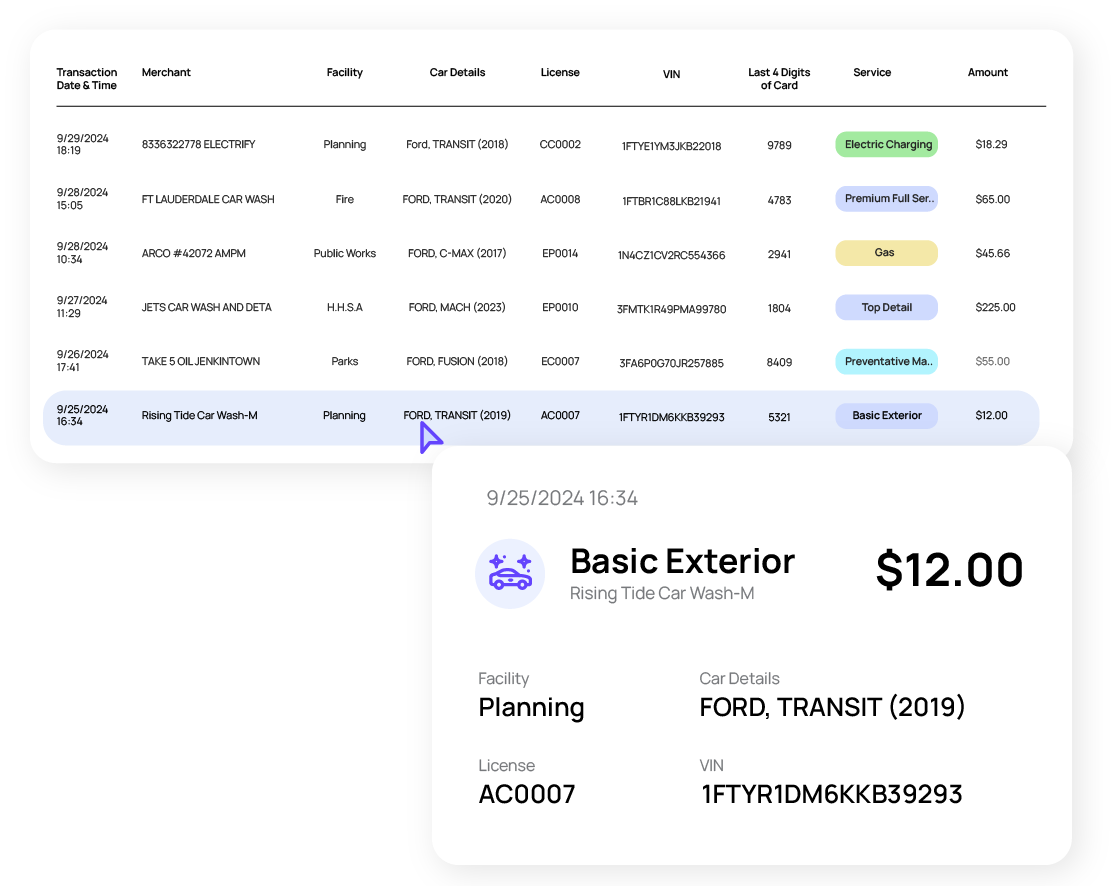
Using two wash methods only works if they're visible in one place. Rynse centralizes every wash, mobile or in-bay, so nothing slips through the cracks.
- Centralized billing that rolls every wash into one itemized invoice.
- Simplified procurement through a single vendor relationship instead of many.
- Customizable spend controls by vehicle, vendor, or department.
- Built-in fraud monitoring that flags unusual activity automatically.
Frequently Asked Questions
What is mobile fleet washing?
A crew travels to the yard or job site and washes vehicles where they're parked, so they never have to leave for a wash.
When does mobile washing make more sense than a wash location?
When vehicles stay parked in one place, are too big for a standard wash bay, or are expensive to pull off their route.
Can I use mobile and brick-and-mortar washing together?
Yes. Most fleets mix both: mobile for vehicles that stay put, brick-and-mortar for vehicles already on the move.
How does Rynse handle mobile washing?
Rynse connects fleets to mobile providers and thousands of brick-and-mortar wash locations nationwide, with every wash tracked in one platform.
The Right Wash for Every Vehicle
Mobile washing isn't better or worse than a brick-and-mortar wash location. It's the right tool when vehicles stay put, run big, or can't spare the trip.
The strongest programs use both and manage them within one program.

Rynse Team