A fleet car wash network gives every vehicle in a fleet access to approved wash locations across a service area under one account. A working network keeps an approved site close enough to each route that drivers lose little time getting a vehicle washed.
What a Fleet Car Wash Network Covers
A fleet car wash network brings a group of wash providers together under a single agreement. Four pieces make it work:
- Coverage — brick-and-mortar washing at approved sites plus mobile washing at the yard or job site
- Driver access — an approved way to start a wash without cash or a personal card
- Billing — one itemized invoice in place of receipts from separate vendors
- Spend controls — limits on how often, where, and at what price washes happen
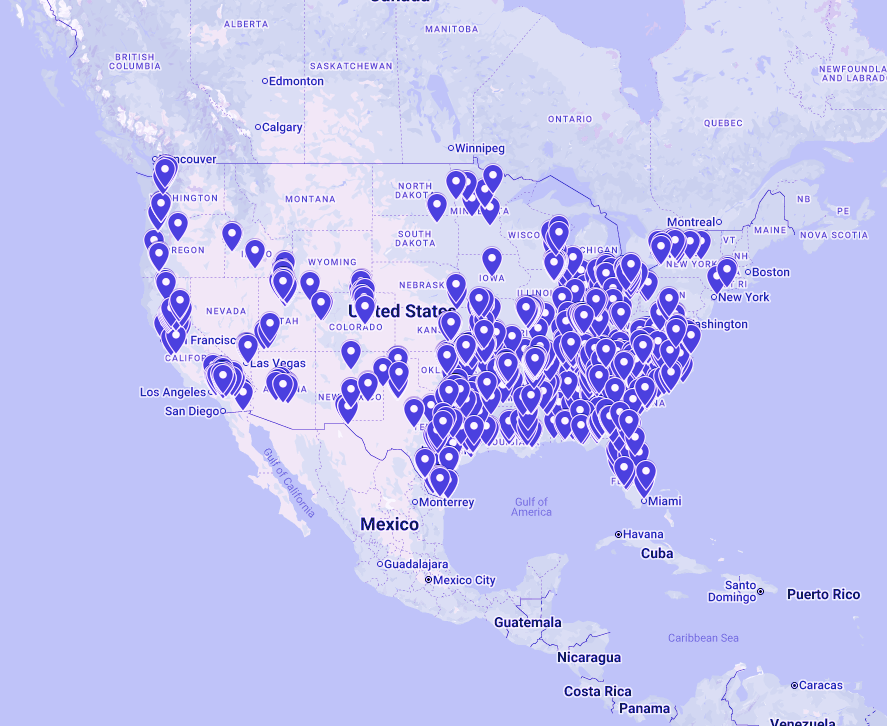
Rynse connects fleets to both mobile wash providers and thousands of brick-and-mortar wash locations nationwide through a single wash network, so one program serves patrol cars, refuse trucks, vans, and heavy equipment.
Why One Wash Vendor Can't Cover a Whole Fleet
The car wash industry is fragmented. IBISWorld counts 16,879 car wash and auto detailing businesses in the United States in 2026, and as of May 2026 the largest chain operates about 530 locations across 25 states. Signing with one chain limits the fleet to the sites that chain already runs near its routes.
Single-vendor wash access creates a few consistent problems:
- Vehicles assigned to outlying districts drive past closer washes to reach an approved one
- One approved site closing removes wash access for the whole fleet
- Refuse trucks, plows, and other large units don't fit through an express tunnel
- Pricing negotiated at one site doesn't transfer to another
Distance is the cost that grows fastest as a fleet spreads out. Putting an approved site near each district is the main way wash networks reduce driver downtime, and the same pattern shows up when a single wash location can no longer keep up with the fleet.
How Drivers Start an Approved Wash
A network needs a way to confirm at the wash site that a vehicle belongs to the fleet and is cleared for that wash. Three methods handle it: physical fleet cards, RFID tags mounted on the vehicle, and license plate recognition that reads the plate at the entrance. Most fleets mix them by vehicle type, and the tradeoffs between fleet cards, RFID, and LPR come down to how much handling the fleet wants to ask of drivers.
One Invoice for Every Wash
Consolidated billing saves the most administrative time. Every wash across every provider lands on one itemized invoice tied to a vehicle, a date, and a location.
- One payable in place of separate vendor invoices and driver receipts
- Wash activity tied to a vehicle number, so cost per unit is visible
- Limits by vehicle, location, or wash frequency
- Fraud monitoring that flags washes outside the approved pattern
The same reporting makes flexible wash spend controls practical, and it removes the month-end reconciliation work covered in consolidated wash billing.
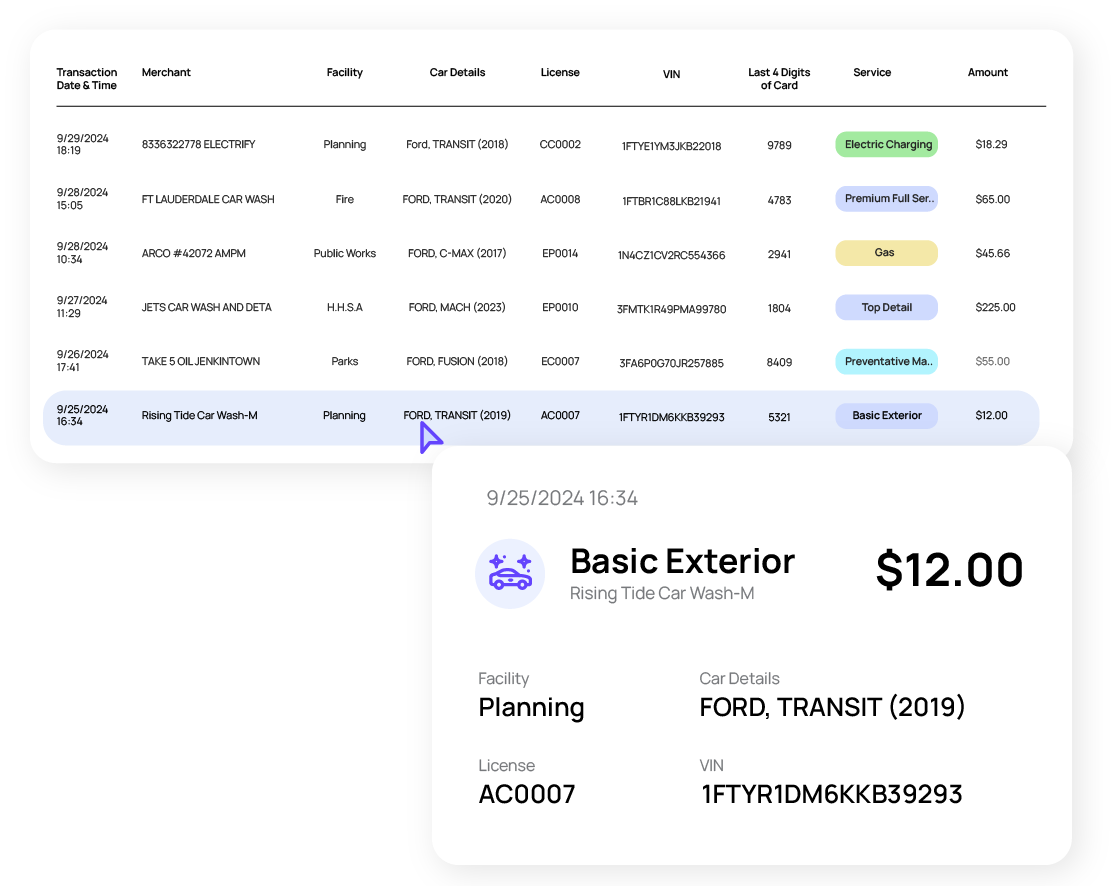
Real-time wash reporting also shortens the gap between a questionable transaction and someone reviewing it.
What to Look For in a Fleet Wash Network
Five criteria matter most when evaluating a fleet wash network:
- Density near operations — approved sites close to routes and yards across the full service area
- Both wash methods — brick-and-mortar washing for road vehicles and mobile washing for units that can't leave the yard
- Vehicle fit — sites and providers equipped for the largest units in the fleet
- Consistent pricing — negotiated rates that apply across the network
- Procurement path — a contract vehicle the agency can buy from
Pricing deserves a closer look, because the per-wash rate moves with volume and wash type. Bulk wash pricing shows how those rates are built.
Frequently Asked Questions
What Is a Fleet Car Wash Network?
It's a group of wash providers a fleet can use under one agreement, with a single account covering approved locations, driver access, billing, and spend limits.
Does a Fleet Wash Network Include Mobile Washing?
It should. Brick-and-mortar washing handles vehicles that travel, and mobile washing covers equipment that stays at the yard or job site. Most fleets need both.
How Does Billing Work Across Multiple Wash Providers?
The network consolidates every wash into one itemized invoice, with each line tied to a vehicle, date, and location, so accounting handles one payable.
Can a Wash Network Support Heavy Equipment?
Yes, when the network includes mobile wash providers and sites equipped for large units. Graders, plows, and refuse trucks are usually washed on site.
Wash Access That Scales With the Fleet
A fleet car wash network turns vehicle washing into one program: nearby approved sites, mobile washing where vehicles can't travel, and a single invoice with controls on every transaction. As the fleet adds vehicles and territory, the wash program grows with it.

Rynse Team