
A wash program only works when every wash belongs to a vehicle that's supposed to be there. The moment access rides on something a driver can hand off, the numbers stop matching the fleet.
License plate recognition (LPR) fixes that at the source. Instead of authorizing a card or a tag, the wash authorizes the vehicle itself, and a plate can't be lent to a neighbor or slipped to a personal car.
Rynse connects fleets to both mobile wash providers and thousands of brick-and-mortar wash locations nationwide, and plate verification is what keeps that access tied to the right vehicles.
What License Plate Recognition Actually Does
The read happens the moment a vehicle pulls up, with no swipe or tag on the driver's end:
- Reads the plate as the vehicle arrives, no card or tag needed
- Checks it against the fleet's enrolled vehicles in real time
- Approves the wash only when the plate is on the program
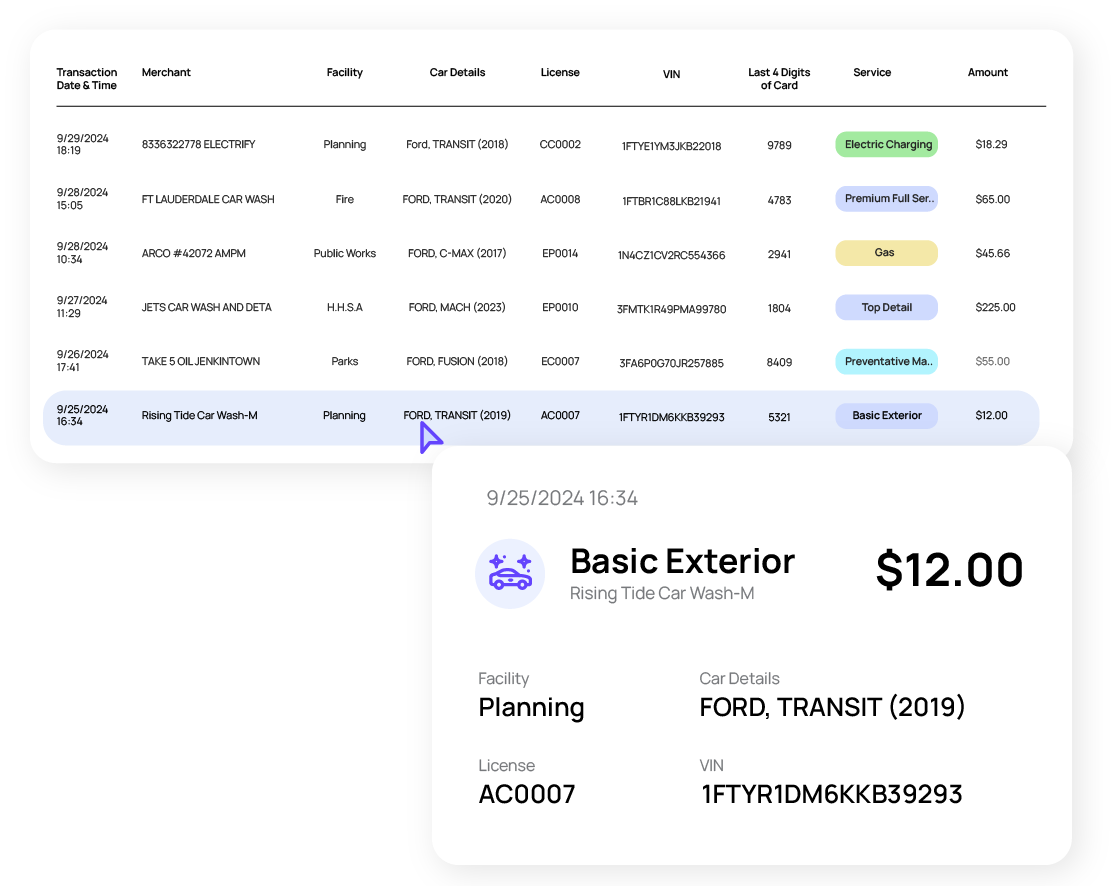
- Records the visit against that exact vehicle
It's one of three ways drivers get access, alongside RFID tags and fleet cards, but the plate is the hardest to fake.
Card, Tag, or Plate: Three Ways In
Fleets usually authorize washes one of three ways, and the difference is what the wash actually checks:
- Physical card: a card the driver presents or swipes at the wash
- RFID tag: a tag mounted on the vehicle that reads hands-free at entry
- License plate: the plate itself, read by a camera and matched to the fleet
A card and a tag can both travel to a vehicle that shouldn't wash. The plate can't, which is what makes it the tightest option. Fleets weighing tags can dig into RFID fleet washing explained.
Where Unauthorized Washes Come From
Most misuse isn't dramatic. It's small, routine, and easy to miss on a card- or tag-based program:
- A driver runs a personal car through on the fleet's account
- One card or tag covers vehicles it was never meant to
- A lost or shared credential keeps washing long after it should
- Charges show up with no clear vehicle attached
How LPR Shuts Down Unauthorized Washes
Because the plate is the credential, there's nothing to share and nowhere for an off-program wash to hide:
- Only enrolled plates get approved at the wash
- Personal vehicles are turned away automatically
- There's no card or tag to lend, copy, or lose
- Every approved wash maps back to one vehicle
Spend Controls That Back Up the Plate
Plate verification decides which vehicles can wash. Spend controls decide how:
- Per-wash caps hold drivers to the approved wash package
- Limits are enforced at the wash, not caught weeks later
- Policies can differ by vehicle group or location
- One problem vendor can be blocked without touching the rest
Access That Follows the Vehicle Everywhere
The plate is recognized across Rynse's nationwide wash network, not just at one bay:
- Drivers wash at the nearest approved location instead of crossing town
- Coverage spans both mobile washing and brick-and-mortar washing
- No single-site dependency when one location is busy or closed
- The same verification works everywhere the fleet washes
Cleaner Data, Simpler Billing
When every wash is tied to a real plate, the back office gets easier too:
- Centralized billing rolls every location into one invoice
- Real-time reporting shows what washed, where, and when
- Built-in fraud monitoring flags anything that looks off
- Cost-per-vehicle stays accurate because nothing is untraceable
Frequently Asked Questions
Does license plate recognition need any hardware in the vehicle?
No. The cameras live at the wash, so there's nothing to install, mount, or hand out. If a plate is enrolled, the wash recognizes it. That's the main difference from an RFID tag, which has to be mounted on each vehicle.
How is LPR different from an RFID tag?
An RFID tag reads hands-free but sits on the vehicle and can be peeled off and moved. The plate is already on the car, so access can't be swapped to another vehicle.
Can a driver still upgrade to a pricier wash?
Only if policy allows it. Per-wash spend controls cap the package at the wash itself, so an upgrade past the limit won't go through.
How quickly do plate washes show up in reporting?
LPR visits appear once the vendor's monthly usage report uploads, while card swipes post in real time. Either way, each wash ties back to a specific vehicle.
Every Wash Tied to the Right Vehicle
Unauthorized washes thrive on credentials that can be shared. Tie access to the plate, back it with spend controls, and the fleet's wash spend finally matches the fleet.

Rynse Team