Fleet vehicles get dirty fast, and the wash needs to be quick, tracked, and tied to the right vehicle. RFID handles all three without a card in anyone's hand.
RFID has become one of the cleanest ways to give fleet vehicles wash access. Here's what it is, how it works, and how it stacks up against the other options.
What RFID Fleet Washing Is
RFID stands for radio-frequency identification. In a wash program, a small tag on the vehicle talks to a reader at the wash, so the vehicle is recognized the moment it pulls in.
- A tag mounts on the windshield, usually behind the mirror or in a lower corner.
- A reader at the entry lane picks up the tag from up to 30 feet away.
- The wash system matches the tag to the vehicle and its account.
- No window rolls down and no card changes hands.
How RFID Wash Access Works
Under the hood, it's four quick steps.
Why Fleets Use RFID for Washing
For a fleet, the appeal is less about the tag and more about what it takes off the daily to-do list.
- Nothing for drivers to carry, swipe, or lose.
- Each wash ties to a specific vehicle, so records stay clean.
- Tags disable themselves if pried off, which cuts down on misuse.
- Washes log automatically, so reporting doesn't lean on memory, giving drivers more time on the route.
RFID, License Plate Recognition, and Fleet Cards
RFID isn't the only way a vehicle gets recognized at the wash. Most fleets settle on one of three methods.
- RFID reads a windshield tag automatically at the lane.
- License plate recognition reads the plate with a camera, so there's nothing to carry.
- Fleet cards assign a card to each vehicle and post spend in real time.
There's no single right answer, and it depends on the fleet, the vehicles, and the wash locations in play. Our guide to LPR, RFID, and fleet cards breaks down the differences in more depth.
Where RFID Fits in a Fleet Wash Program
The tag is only the front door. What matters is the program behind it.
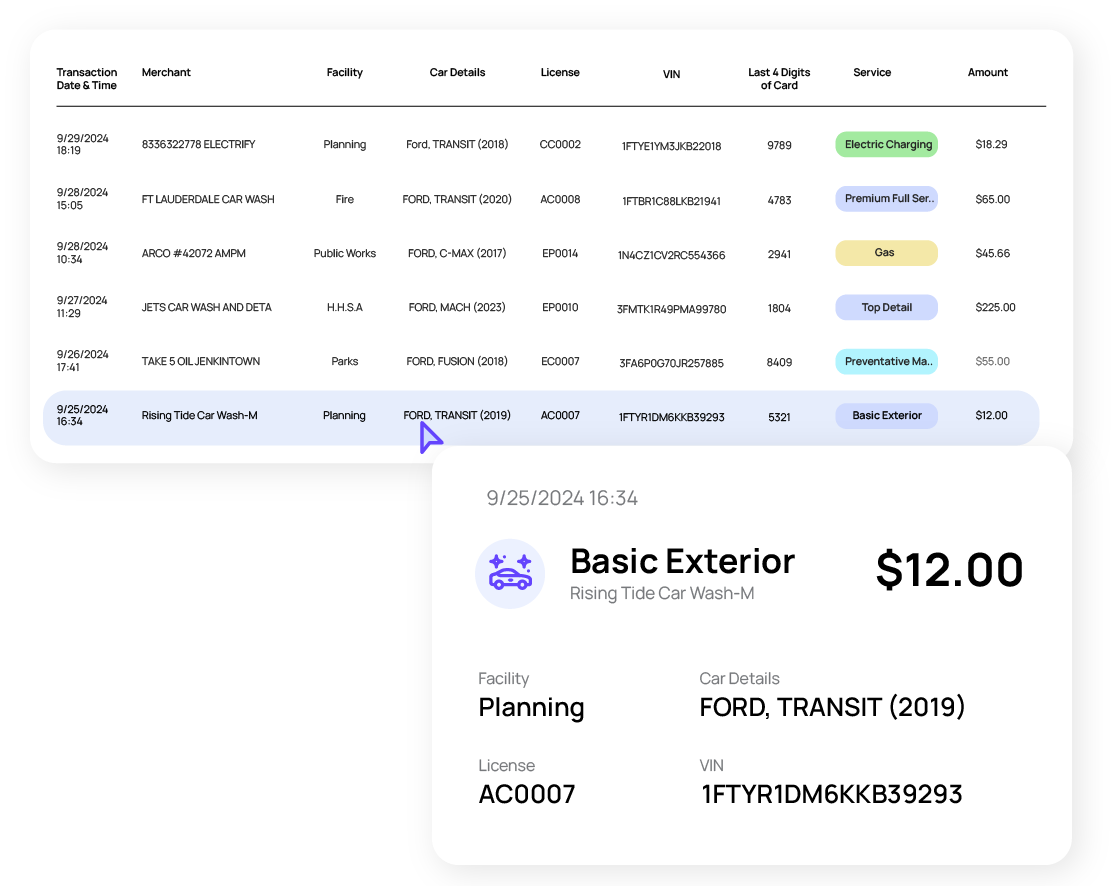
- Centralized billing pulls every wash onto one itemized invoice.
- Customizable spend controls cap washes by vehicle, price, or location.
- Real-time reporting shows what got washed, where, and when.
- Built-in fraud monitoring flags anything that looks off.
- Access to both mobile wash providers and thousands of brick-and-mortar wash locations nationwide.
Rynse ties all of it to a nationwide wash network, so access travels with the vehicle instead of a single site.
Frequently Asked Questions
Do Drivers Need to Do Anything Different?
No. The tag reads automatically, so drivers pull in and wash as usual.
What Happens if a Tag Is Removed or Damaged?
Most tags disable themselves if pried off, so one vehicle's tag can't be used on another. A damaged tag gets replaced and re-linked to the vehicle.
Can RFID and License Plate Recognition Work Together?
Yes. Many fleets mix methods, since different vehicles and wash locations support different setups. Rynse also connects fleets to both mobile washing and brick-and-mortar washing.
Does RFID Lock a Fleet Into One Wash Location?
No. Access follows the vehicle, not a single site, which helps fleets avoid the risk of relying on one wash location.
The Simplest Way to Keep Vehicles Clean
RFID takes the friction out of wash access, with no cards, no waiting, and no guesswork on what got washed. Paired with centralized billing, spend controls, and real-time reporting, it keeps the whole fleet clean and every wash accounted for.

Rynse Team