
Physical wash cards were fine when a fleet washed at one location. As programs grow across cities and vehicle types, the little plastic card starts to get in the way.
More fleets are tying wash access to the vehicle itself instead of a card in the glovebox. Here's why the shift is happening, and what it means for the fleet.
The Trouble With Physical Wash Cards
Cards work until they don't. The friction shows up as a program scales:
- Cards get lost, left at home, or passed between drivers.
- Every new hire or new vehicle means another card to issue.
- A lost card is a support ticket and a replacement wait.
- There's no clean way to prove which vehicle actually got washed.
None of that is a dealbreaker on its own. Together, it's steady admin work that backs everything up.
What Fleets Actually Want From Wash Access
- Access that follows the vehicle, not a piece of plastic.
- A clear record of every wash by vehicle.
- Less time issuing, tracking, and replacing cards.
- Built-in checks so only approved vehicles get washed.
Three Ways Drivers Access a Wash Today
Rynse supports all three, so the fleet can pick what fits each vehicle:
- Fleet cards, the familiar option, still useful where a card makes sense.
- RFID tags mount on the vehicle, so access travels with the truck. Here's how RFID fleet washing works.
- License plate recognition (LPR) turns the plate into the credential, which stops unauthorized washes before they happen.
Want them side by side? We compare all three access methods in detail.
Why Vehicle-Based Access Wins
When access lives on the vehicle instead of a card, the everyday headaches fade:
- No cards to hand out, collect, or replace.
- Every wash ties back to a specific vehicle automatically.
- Drivers pull in and go, with nothing to remember.
- Approved vehicles get washed; anything else gets flagged.
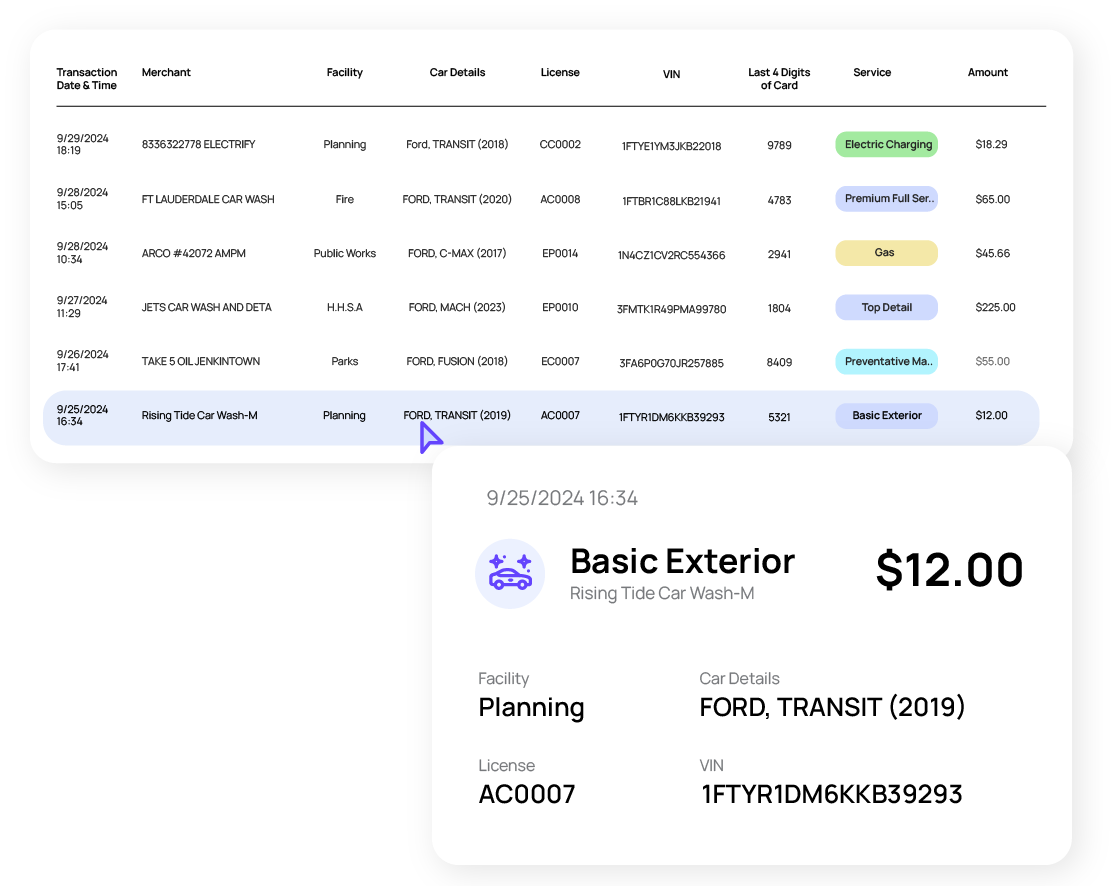
The same setup feeds real-time wash activity, so there's a clean record without chasing paper.
Wash-First, With Control Built In
Access is the small part. The real value is what sits behind it:
- Centralized billing rolls every wash into one itemized statement.
- Customizable spend controls set limits by vehicle, location, or frequency.
- Built-in fraud monitoring flags anything that looks off.
- One nationwide wash network covers both mobile wash providers and thousands of brick-and-mortar wash locations nationwide.
Frequently Asked Questions
Do drivers still need a physical card with Rynse?
No. Access can run on the license plate or an RFID tag, so there's nothing for drivers to carry. Cards are still available where they make sense.
What happens if a card is lost or a driver leaves?
With vehicle-based access there's no card to cancel or reissue. Access is tied to the vehicle, so it stays put when drivers change.
How does the fleet know which vehicle was washed?
Every wash is recorded against the specific vehicle and shows up in reporting, so there's a clean record without manual reconciliation.
Can access methods be mixed across the fleet?
Yes. Fleet cards, RFID tags, and license plate recognition can all run on the same program, so each vehicle uses what fits best.
The Right Access for Every Vehicle
Physical cards aren't going away overnight, but they don't have to be the default anymore.
When access lives on the vehicle, washing gets simpler for drivers and cleaner for the fleet, with billing, controls, and reporting handled in one place.

Rynse Team