
A clean fleet protects vehicles, frees up drivers, and holds its value longer. The trick is knowing how to measure it. Here's how to calculate the real ROI of a fleet wash program.
Why Fleet Washing Is an Investment, Not an Expense
The return of regularly washing vehicles shows up across the whole operation:
- Vehicles last longer when road salt and grime don't sit on them for weeks.
- Drivers stay on the road instead of driving across town or waiting in line.
- Clean vehicles hold meaningfully higher resale value at trade-in.
- Consistent washing surfaces small issues before they turn into expensive repairs.
The Inputs That Drive Your Wash ROI
Every fleet's math is different. A handful of inputs move the number most:
- Fleet size and the mix of vehicle types.
- How often each vehicle actually needs washing.
- What a wash costs at one location versus another.
- How far drivers travel to get there.
- What an hour of driver and vehicle time is worth.
The Hidden Costs Most Fleets Miss
The biggest costs rarely appear on a wash invoice. They hide in labor and lost time:
- Driver travel — sending drivers across town backs everything up.
- Vehicle downtime — every hour a vehicle is offline is an hour it isn't working.
- In-house washing — water, equipment, cleanup, and environmental compliance add up fast.
- Admin — chasing invoices across multiple vendors eats manager hours.
The Savings That Show Up Later
Some returns take months to appear, but they're often the largest:
- Corrosion protection — regular washing clears salt and grime before they eat away at undercarriages and brake components.
- Longer vehicle life — even one or two extra years per vehicle far outweighs the cost of washing.
- Stronger resale value — buyers pay more for clean, well-documented vehicles.
- Fewer surprise repairs — clean engines and undercarriages are easier to inspect and service.
How to Run the Numbers
Working out the return doesn't take a spreadsheet degree. Move through it in four steps:
- Add up current wash spend — price per wash, times frequency, times fleet size.
- Add the hidden costs — driver hours, downtime, and admin time spent managing it.
- Estimate the returns — maintenance avoided, added vehicle life, and resale gained.
- Compare that total against a managed program that trims travel, downtime, and admin.
When the hidden costs and long-term returns are in the math, a convenient, well-run wash program almost always comes out ahead of the cheapest wash down the road.
Where Rynse Changes the Math
Rynse is the fleet wash platform, and it attacks the exact costs that drag ROI down:
- A nationwide wash network lets drivers wash close to where they operate, cutting travel and downtime.
- Centralized, itemized billing replaces the scramble across vendor portals.
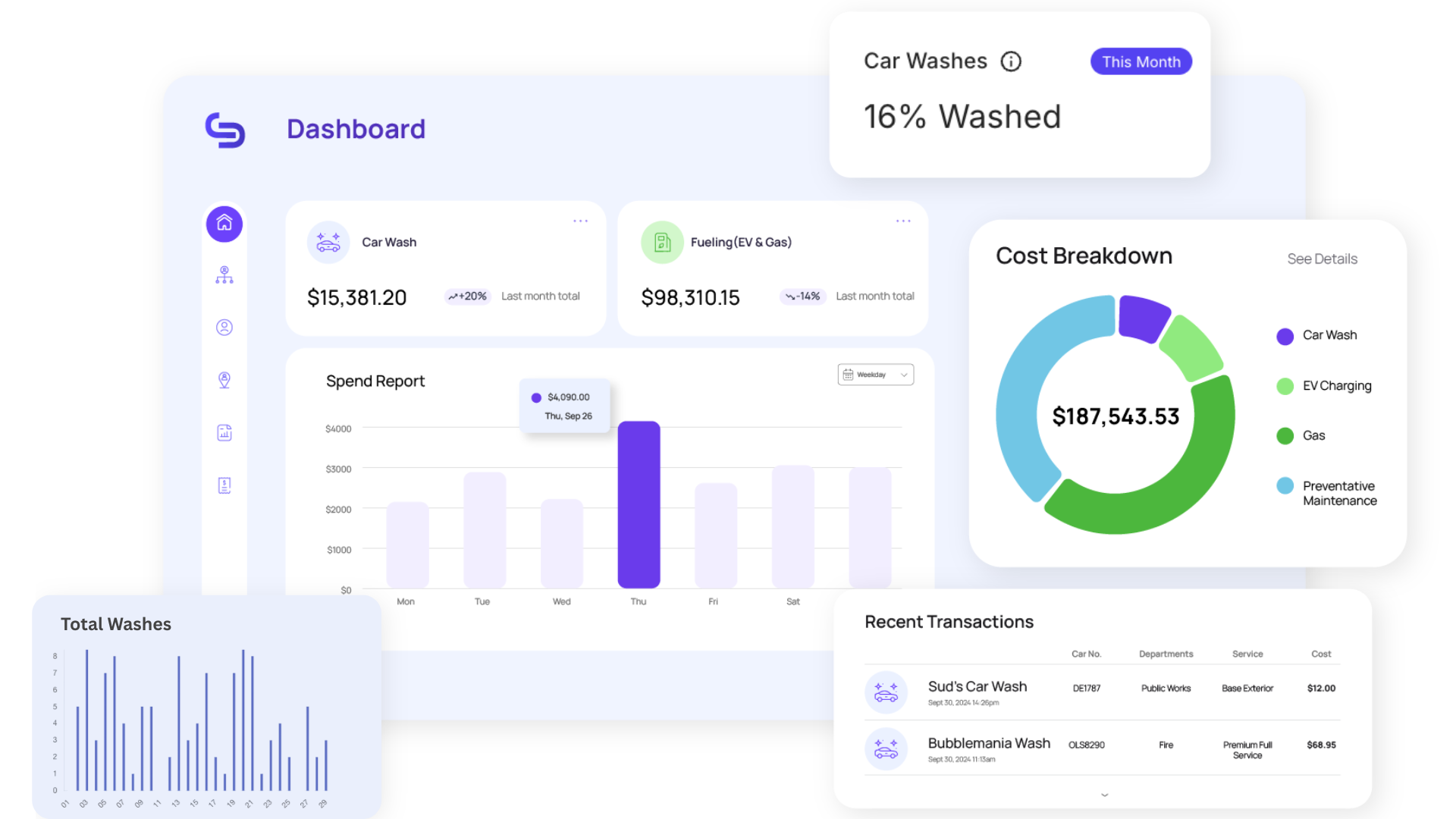
- Customizable spend controls and built-in fraud monitoring keep every wash on budget.
- Real-time insights show where wash spend goes the moment it happens.
- Coverage spans both mobile wash providers and thousands of brick-and-mortar wash locations nationwide.
Frequently Asked Questions
How Do I Calculate Fleet Wash ROI?
Total the returns — labor saved, downtime avoided, maintenance reduced, and resale gained — then subtract the program's cost and divide by that cost. The hidden costs matter as much as the sticker price.
Is Professional Fleet Washing Worth It?
For most fleets, yes. Once driver time, downtime, and long-term vehicle wear are counted, a managed program usually costs less than washing in-house or skipping washes altogether.
How Often Should a Fleet Wash Its Vehicles?
It depends on climate, road conditions, and how the vehicles are used. Fleets in salted-road regions or dusty job sites wash more often to stay ahead of corrosion. The right cadence balances protection against cost.
Does Washing Really Affect Resale Value?
Yes. Clean vehicles with consistent care records command higher prices at trade-in, and that premium adds up to real money across an entire fleet.
A Wash Program That Pays for Itself
The cheapest wash and the best ROI are rarely the same thing. When driver time, downtime, corrosion, and resale are all in the math, a convenient, well-managed program wins.
Rynse makes that math easy to see — and easy to improve.

Rynse Team