A fleet wash program comes down to four decisions: the wash standard, where vehicles get washed, how spending is controlled, and how results get measured. Together they determine whether the program holds up as the fleet grows.
Set the Wash Standard First
The standard defines what a clean vehicle means for each part of the fleet. Set it before evaluating any vendor.
- Frequency by vehicle type. Weekly for high-visibility units, biweekly or monthly for equipment that mostly stays on site.
- Seasonal adjustments. Salt exposure raises the frequency. Industry guidance points to washing within roughly 48 hours of salt contact to limit undercarriage corrosion.
- Undercarriage rules. Decide which vehicles need underbody rinses, and during which months.
- Appearance thresholds. Marked units, patrol cars, and customer-facing vans carry a higher bar than a yard truck.
Every later decision measures against this standard. The complete guide to fleet washing goes deeper on setting those baselines.
Map Coverage Around Where Vehicles Actually Operate
A wash standard only holds up if drivers can meet it without driving 30 minutes each way. Coverage is the second decision.
- Plot yards, depots, and common routes, then look for wash access near each one.
- Count how many vehicles depend on a single site. One closure shouldn't stall the whole program.
- Give take-home and remote vehicles options near where they park overnight.
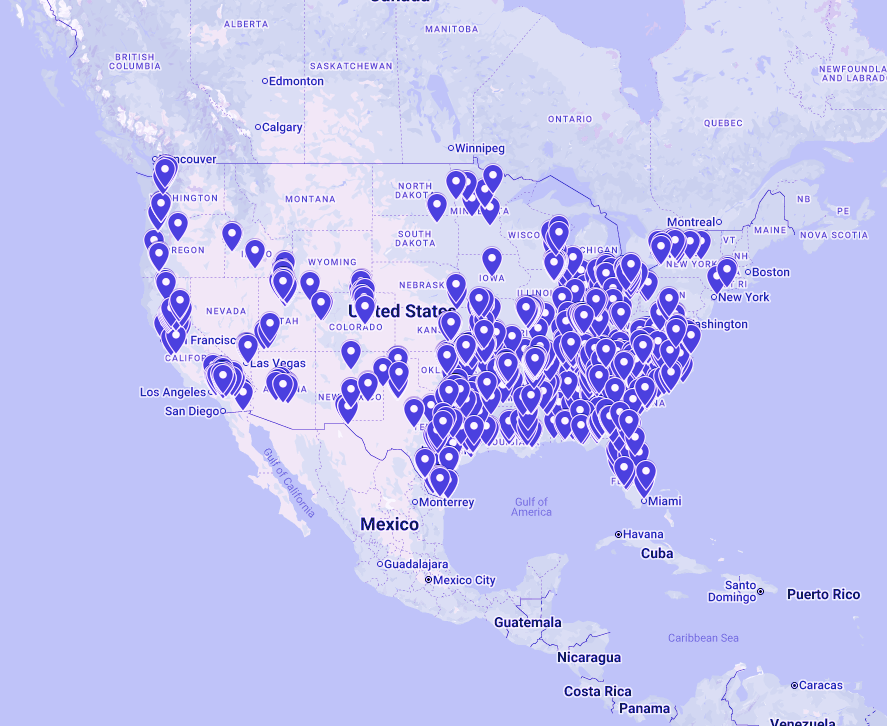
Rynse connects fleets to both mobile wash providers and thousands of brick-and-mortar wash locations nationwide, so coverage can follow the routes the fleet already runs. See how the nationwide wash network is built.
Choose the Right Mix of Mobile and Brick-and-Mortar Washing
Most programs need both methods. The split comes down to vehicle size and where units sit overnight.
- Brick-and-mortar washing suits sedans, SUVs, pickups, and vans that move through town during the day.
- Mobile washing suits refuse trucks, buses, plows, and anything too tall or too specialized for a tunnel.
- Mixed fleets often route light-duty units to brick-and-mortar washing and schedule mobile washing on site for heavy equipment.
There's more detail in our breakdown of how fleets combine mobile and brick-and-mortar washing.
Set Spend Controls Before the First Wash
Controls are easier to put in place at launch than to retrofit after six months of surprise charges.
- Set wash limits per vehicle, per group, or per month.
- Restrict the program to approved wash types and services.
- Turn on fraud monitoring so unusual activity surfaces on its own.
- Keep one itemized invoice instead of receipts scattered across departments.
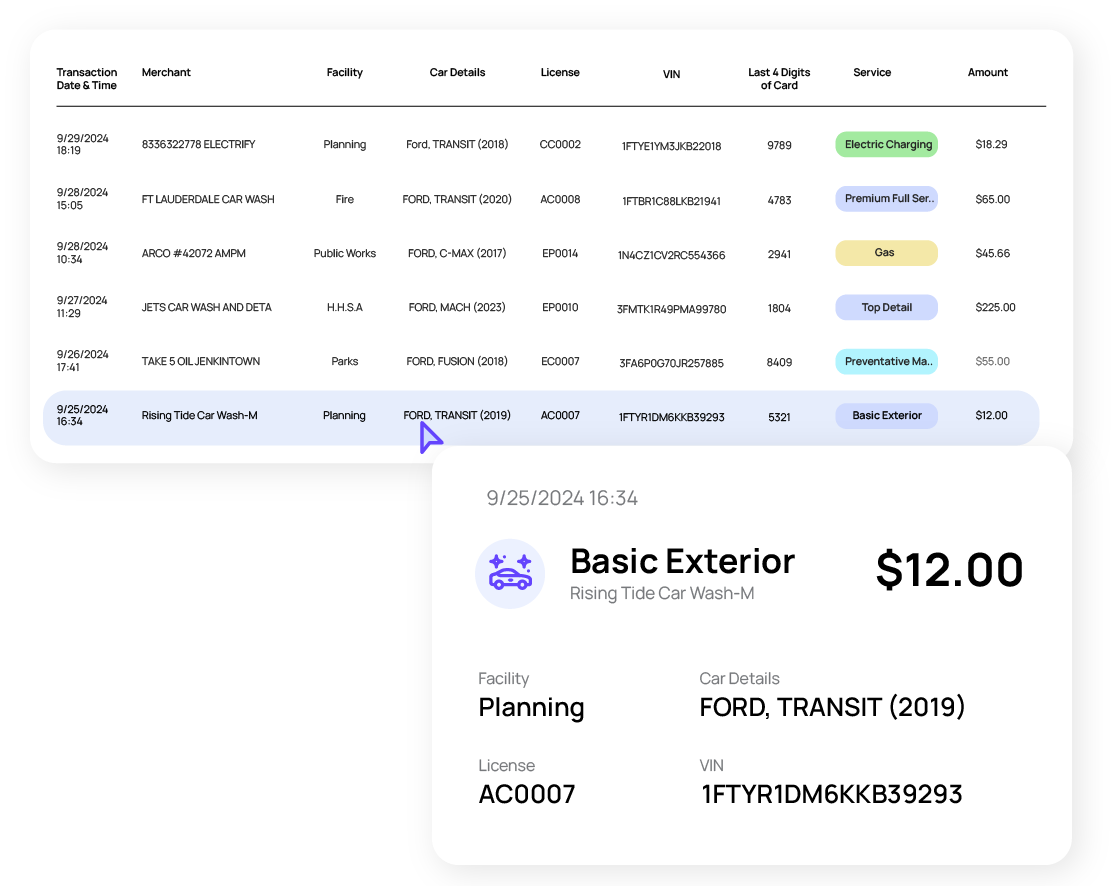
Rynse handles this with customizable spend controls and centralized billing. Drivers get access through physical fleet cards, RFID tags, or license plate recognition, depending on what the site supports.
Start Procurement Early
Procurement adds months to a launch when it's left until the end. Begin it while the standard is still being written.
- Confirm whether a cooperative contract can replace a full bid cycle.
- Collect vendor paperwork, insurance, and W-9s in one pass.
- Decide who owns approvals so invoices don't stall in review.
Public agencies can work through our fleet wash procurement guide for the specifics.
Measure the Program With Real Numbers
Reporting is what shows whether the standard is being met. Track a small set of measures monthly.
- Washes completed per vehicle against the standard.
- Average cost per wash, by method and by location.
- Driver travel time to the nearest wash site.
- Vehicles that fell behind schedule, and why.
Live data makes those measures useful while the month is still in progress, which is the case for real-time fleet insights. To put a dollar figure on the program, start with the fleet washing ROI calculator.
Frequently Asked Questions
How Often Should Fleet Vehicles Be Washed?
It depends on exposure. Weekly is common for high-visibility and high-mileage units, biweekly or monthly works for lower-use equipment, and salt season usually pushes everything to a tighter cycle with undercarriage rinses.
How Long Does It Take to Launch a Fleet Wash Program?
Procurement usually takes the longest. Agencies that can use an existing cooperative contract often go live in weeks instead of running a months-long bid.
Does a Program Need a Wash Bay On Site?
No. Many fleets avoid the capital cost by combining brick-and-mortar washing near their routes with mobile washing for oversized equipment.
How Is Wash Spending Kept Under Control?
Through limits set per vehicle or group, approved service types, itemized billing, and fraud monitoring that flags unusual activity as it happens.
A Wash Program That Scales With the Fleet
Durable wash programs share four traits: a clear standard, coverage that matches where vehicles operate, controls set from day one, and reporting that shows whether the standard is being met. Price per wash matters less than any of them.
With those in place, adding 20 more vehicles or a second yard is a scheduling change.

Rynse Team