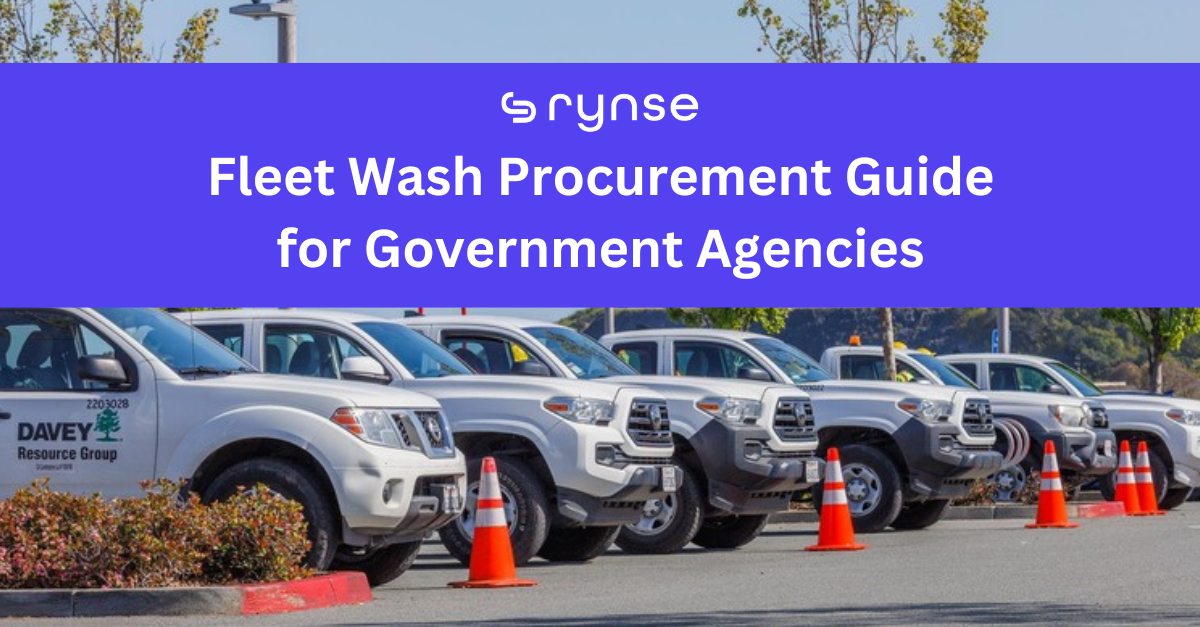
Buying fleet washing as a public agency means working through bid rules, scope requirements, and contract timelines before a single vehicle gets clean. This guide covers the procurement routes available to government fleets, what belongs in a fleet wash scope of work, and how agencies shorten the process.
What Fleet Wash Procurement Actually Covers
A fleet wash contract isn't only about the wash. Procurement teams are buying access, pricing, reporting, and compliance in one package.
- Wash access — brick-and-mortar washing, mobile washing, or both
- Pricing — per-wash rates by vehicle class and how they hold over the term
- Billing — one consolidated invoice or dozens of separate ones
- Reporting — what gets recorded at each wash and who can pull it
- Controls — limits on wash frequency, spend, and authorized vehicles
- Compliance — wastewater handling, insurance, and vendor qualifications
Agencies building a program from the ground up often start with the complete guide to municipal fleet washing before a single spec gets written.
Three Routes to a Fleet Wash Contract
Public agencies generally have three options, and they differ most in how long they take.
- Run an open solicitation. Full control over the specs, and the heaviest lift. Municipal vehicle washing RFPs routinely take months from draft to award, then repeat at renewal.
- Piggyback another agency's award. Faster, since the competitive process already happened — though the terms were written for a different fleet.
- Buy from a cooperative contract. The solicitation was already run competitively on behalf of thousands of public agencies, so the bid requirement is satisfied and the timeline drops sharply.
What Belongs in a Fleet Wash Scope of Work
Strong wash solicitations describe the work in enough detail that bids can be compared line by line.
- Exterior wash components: body, trim, wheels, tires, windows, and undercarriage
- All-inclusive per-vehicle pricing covering travel, labor, equipment, water, detergents, and waste recovery
- Vehicle classes, since a patrol sedan and a tandem dump truck don't price the same
- Wastewater capture and disposal, which is regulated because wash runoff carries oil, grease, sediment, and detergents
- Key control and vehicle security procedures while units are in a vendor's hands
- Service levels, response times, and documentation for every completed wash
Pricing structure deserves its own section. Bulk wash pricing behaves differently from posted consumer rates, and a scope that ignores the difference invites bids that can't be compared fairly.
Where Single-Vendor Wash Contracts Fall Short
Awarding to one vendor seems like the easiest option, but it gets expensive the moment the fleet moves or grows.
- Coverage stops at one site or one crew's route, so drivers travel to reach it
- A closure or a lost vendor stops the program until a new solicitation runs
- Adding a garage on the other side of the county means amending or rebidding
- Rates set at one location say nothing about what a wash costs across town
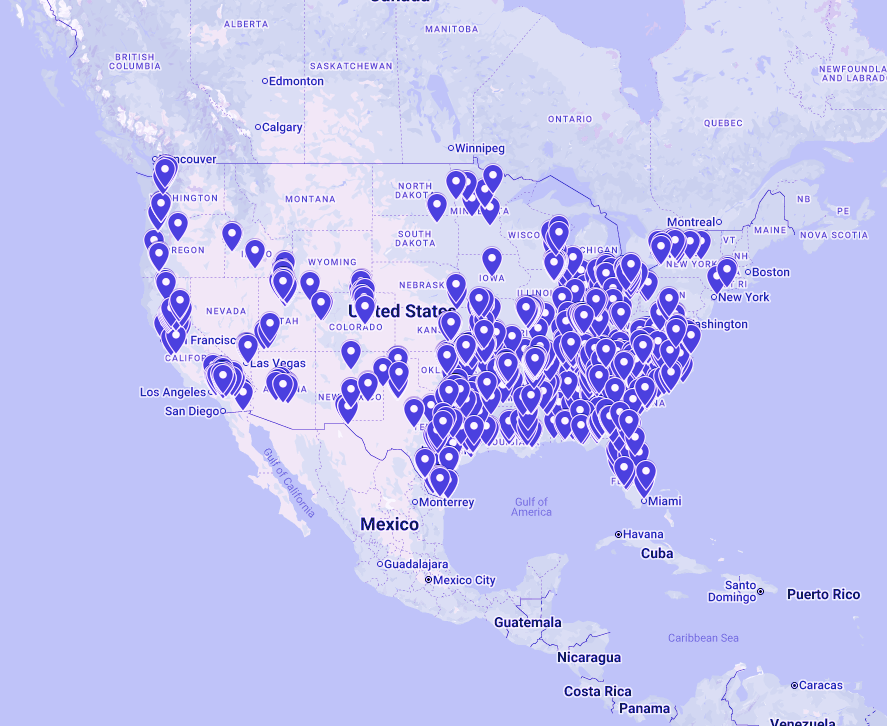
Spreading access across many sites is the practical fix, and it's how fleets eliminate single-location risk without adding administrative work.
How Cooperative Purchasing Shortens the Timeline
Rynse holds a Sourcewell cooperative purchasing contract (031224-RYN) that participating agencies can use in place of running their own wash solicitation.
- The competitive process is already complete, so local agencies cut lead times from months to weeks
- One agreement covers both mobile wash providers and thousands of brick-and-mortar wash locations nationwide
- New sites get added as the fleet grows, without a fresh procurement cycle
- Invoices arrive through centralized, itemized billing instead of vendor by vendor
- Customizable spend controls and fraud monitoring come with the program, not as a separate purchase
The result is a single agreement backed by a nationwide wash network rather than a stack of one-off vendor contracts.
Cooperative Contracts Agencies Can Buy From Today
Rynse holds three cooperative awards, so most public fleets already have a compliant path available without drafting a scope of work.
- Sourcewell, contract 031224-RYN — covers car washing and detailing plus related vehicle services, open to Sourcewell's participating agencies: cities, counties, states, schools, and nonprofits.
- North Carolina Sheriffs' Association (NCSA) — a 2026–2027 award built for law enforcement, and it isn't limited to North Carolina. City, county, and state agencies nationwide can buy from it.
- Virginia Sheriffs' Association (VSA) — a second national cooperative pathway open to eligible government agencies, useful when local rules favor a sheriffs' association award.
All three lead to the same program: one wash account, centralized billing, spend controls, and fraud monitoring, minus the solicitation cycle. Law enforcement fleets often start with a sheriffs' association award, while mixed municipal fleets tend to use Sourcewell.
Questions to Ask Before Awarding a Fleet Wash Contract
- How many wash sites sit within a short drive of where vehicles actually operate?
- Does the contract cover mobile washing, brick-and-mortar washing, or both?
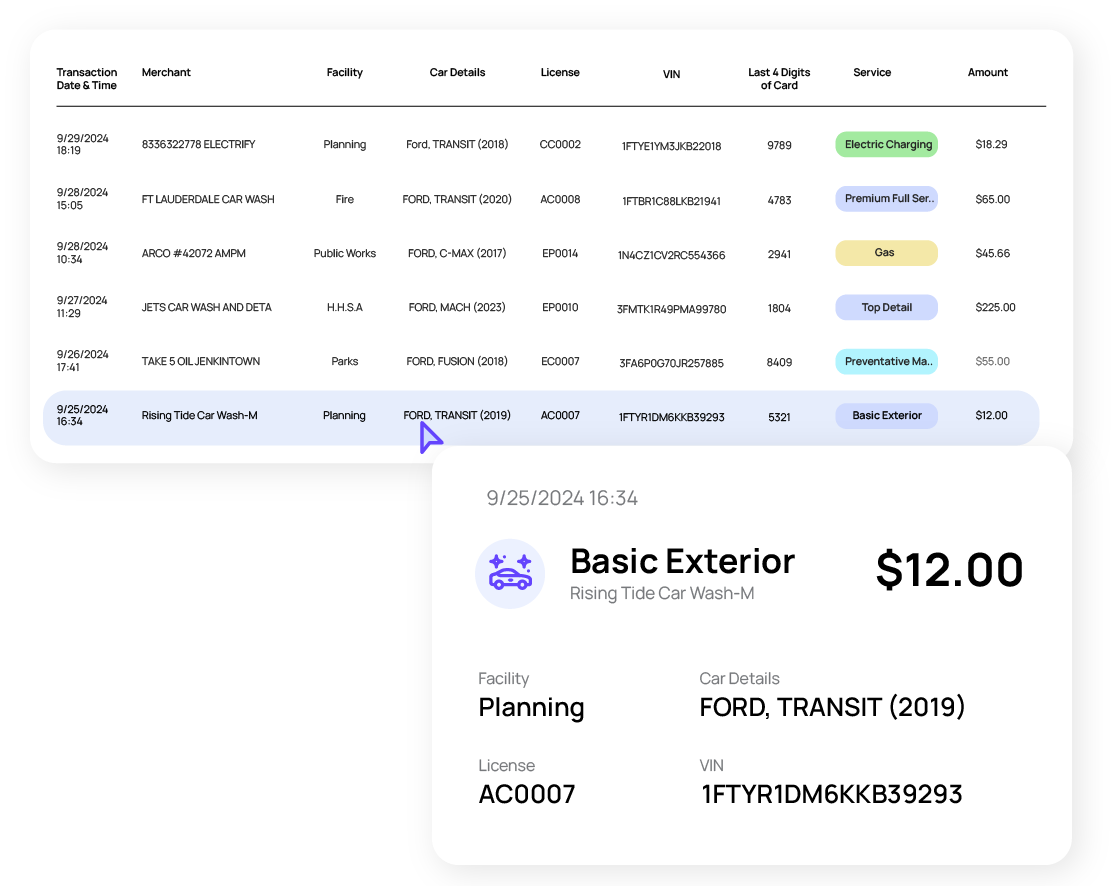
- Will every wash produce a record tied to a specific vehicle and date?
- Can limits be set by vehicle, department, or wash frequency?
- How is potential misuse flagged, and who reviews it?
- What happens when a vendor closes or the fleet adds a new facility?
Reporting is the piece that's easiest to skip and hardest to add later. Real-time wash activity turns a contract into something a fleet can manage day to day.
Frequently Asked Questions
Does Fleet Washing Require a Competitive Bid?
Usually, once spending passes the agency's bid threshold. Thresholds vary by state and jurisdiction, and buying from a cooperative contract typically satisfies the requirement because the competitive solicitation already took place.
How Long Does Fleet Wash Procurement Take?
A full solicitation often runs several months from draft to award. Piggybacking an existing award or buying from a cooperative contract can shorten that to weeks.
Can One Contract Cover Both Mobile and Brick-and-Mortar Washing?
It can, and it usually should. A program that includes both lets each vehicle type use the better method — here's how mobile washing and brick-and-mortar washing compare.
What Should a Fleet Wash Invoice Include?
At minimum: the vehicle, the date, the location, the service performed, and the rate — coded so finance can allocate costs without chasing paper receipts.
Which Cooperative Contracts Does Rynse Hold?
Three: Sourcewell contract 031224-RYN, the North Carolina Sheriffs' Association (NCSA) 2026–2027 award, and the Virginia Sheriffs' Association (VSA) contract. Each one lets an eligible agency add fleet washing without running its own solicitation.
Can Agencies Outside North Carolina and Virginia Use the Sheriffs' Association Contracts?
Yes. Both the NCSA and VSA awards are national cooperative contracts, so eligible agencies across the country can buy from them — not just agencies in those two states.
What Does the Sourcewell Contract Cover?
Car washing and detailing, related vehicle services such as preventative maintenance and garage services, and the platform side of the program: centralized billing, spend controls, and reporting.
How Do Agencies Get Started on a Cooperative Contract?
Confirm the agency is eligible under the cooperative, reference the contract number in the purchase, and Rynse handles enrollment from there. No RFP, no scoring committee, no award timeline.
A Faster Path to a Fleet Wash Program That Works
Procurement rules exist for good reasons, and they don't have to mean an 18-month wait for cleaner vehicles. Between cooperative contracts and nationwide wash coverage, agencies can stand up a compliant program in weeks and keep it flexible as the fleet changes.

Rynse Team